
English| EUR
Suggested for you
More currencies
Choose a language
Turin built its reputation on monarchy, industry, and the arts. The first capital of unified Italy still carries the architectural and cultural weight of the House of Savoy, while newer claims—cinema, automotive design, vermouth—anchor the city in global consciousness.
Quick answer
Turin is famous for its Baroque royal palaces (fourteen Savoy Residences are UNESCO-listed), the National Museum of Cinema inside the Mole Antonelliana, the world's second-largest Egyptian Museum, its role as the birthplace of Italian cinema and vermouth, and artisan chocolate production. The city was Italy's first capital from 1861 to 1865 and remains the headquarters of Fiat and Lavazza.
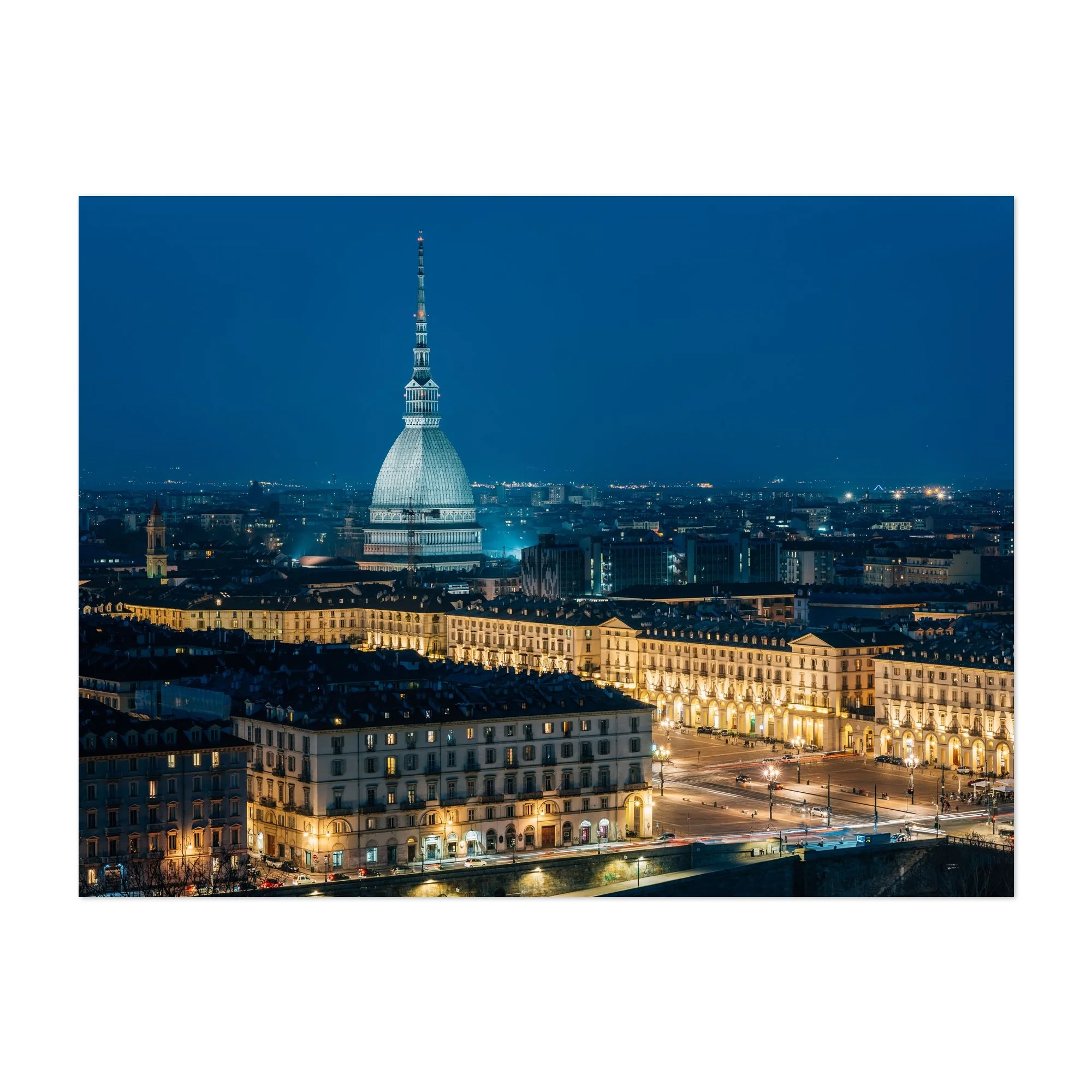
The Mole Antonelliana—originally designed as a synagogue in 1863—rises 167 meters above the city and now houses the National Museum of Cinema, the tallest museum in the world. A panoramic lift climbs to the observation platform at 85 meters, offering views across the Po River valley to the Alps. The building appears on the Italian two-cent euro coin. What is Turin famous for beyond a single monument is the density of royal architecture. The House of Savoy left fourteen residences within and around the city, from the Palazzo Reale in the historic center to the Reggia di Venaria, a hunting palace seventeen kilometers north that rivals Versailles in scale. These palaces form a UNESCO World Heritage Site and carry the history of a dynasty that ruled Piedmont for nearly a millennium before unifying Italy. The royal armory inside Palazzo Reale holds one of Europe's most complete collections of ceremonial weapons and armor. Turin landmarks include the Museo Egizio, which opened in 1824 and holds over 30,000 artifacts—only Cairo's museum is larger. The collection includes the intact Tomb of Kha and the Temple of Ellesiya, reconstructed inside the museum after being saved from the Aswan Dam floods. Visitors often pair the Egyptian Museum with the royal palaces, as both sit within walking distance in the city center. The city's identity also rests on vermouth, invented here by Antonio Benedetto Carpano in 1786, and gianduiotto, a hazelnut-chocolate confection created in the 1860s when cocoa shortages forced local chocolatiers to stretch supplies with Piedmont hazelnuts. Both industries still operate from Turin. The arcaded streets near Piazza San Carlo hold historic cafés where these products were first sold, and chocolate shops along Via Po continue the tradition. Torino cultural heritage extends to cinema—Italy's first film studios opened here in 1905, and the National Museum of Cinema chronicles that legacy with interactive exhibits spanning five floors. The museum's collection includes props, posters, and early projection equipment. Most visitors reach the Mole Antonelliana on foot from Piazza Castello, the central square that connects the royal quarter to the rest of the city.
“The Mole Antonelliana rises 167 meters above Turin and holds the tallest museum in the world.”
Turin serves as a significant center for industrial history, cinematic evolution, and religious heritage in northern Italy. Its identity is defined by a legacy of manufacturing, innovation, and long-standing cultural institutions.
Turin became the center of the Italian automotive industry when the Fabbrica Italiana Automobili Torino was founded here by Giovanni Agnelli and his partners. The city remains closely linked to the history of the FIAT brand and Italian motor production.
The city is recognized as the birthplace of the Italian film industry, which flourished here in the early 20th century. This history is preserved and celebrated at the National Museum of Cinema located within the Mole Antonelliana.
The Cathedral of Saint John the Baptist houses the Shroud of Turin, a centuries-old linen cloth bearing the image of a man who appears to have suffered physical trauma consistent with crucifixion. It remains one of the most studied and debated religious artifacts in the world.
Turin served as the first capital of the unified Kingdom of Italy from 1861 to 1865. The city retains this political legacy through its grand architecture, historic squares, and royal residences.
Originally designed as a synagogue in 1863 by Alessandro Antonelli, the structure grew into a symbol of the city. Standing at 167.5 meters, it is a prominent architectural landmark that defines the Turin skyline.
The city and its surrounding areas feature a collection of 17th and 18th-century palaces known as the Residences of the Royal House of Savoy. These sites are recognized as a UNESCO World Heritage site for their baroque architecture and influence on European urban planning.
The National Museum of Cinema at the Mole Antonelliana operates on a weekly schedule, remaining closed on Tuesdays.
To experience Turin with the lowest density of visitors, the best arrival window is 09:00–10:30. Arriving during this period helps you avoid mid-day queues and peak crowds for the panoramic lift ascent.
Mild, 15°C to 20°C
Ideal for walking between historic sites and public gardens.
Cool, 10°C to 15°C
Often clear skies provide better visibility from elevated viewpoints.
Warm, 25°C to 30°C
Expect increased tourist traffic and warmer temperatures throughout the city.
—
Utilizing this arrival window minimizes wait times at major landmarks.
Verdict: For the most efficient visit, plan your arrival for a weekday morning between 09:00–10:30 during the months of April or October.
The Mole Antonelliana is located at Via Montebello 20, situated in the heart of Turin's city center. The area is well-connected by public transport and remains highly accessible by walking from major landmarks.
Line M1 to Porta Nuova station, then 15-minute walk
Line 61 or 68 to Verdi stop
From Piazza Castello via Via Po
If arriving by car, note that street parking is limited in the central ZTL zone; using public transit or walking from central squares is recommended to reach the entrance efficiently.
Everything you need to know about what is turin famous for
Turin is globally recognized for its rich Baroque architecture, automotive history, and its position as a center for Italian cinema. Many visitors explore the city to understand what is turin famous for by visiting cultural institutions like the National Museum of Cinema.
The Mole Antonelliana is a primary landmark that highlights what is turin famous for, serving as both an architectural icon and home to the museum. Other notable sites include the Royal Palace and the Shroud of Turin, which contribute to the city's unique cultural landscape.
The best arrival window to experience these sites is 09:00–10:30, which helps you avoid mid-day queues and peak crowds. Planning your arrival during this period ensures a smoother experience at the panoramic lift ascent.
The entrance fee is 23 EUR, which covers the combined entry for the National Museum of Cinema and the panoramic lift. This fee provides access to the historic venue located at Via Montebello 20, 10124 Torino, Italy.
To truly understand what is turin famous for, visitors should prioritize early morning visits to popular attractions to manage crowd levels. Checking the official site at https://www.museocinema.it can provide further context for your planning.
The museum is open from Monday through Sunday, 09:00–19:00, though it remains closed on Tuesdays. You may reach out via phone at +390118138511 for any specific inquiries regarding your visit.